
London School of Economics (LSE) Admission Rates/Statistics
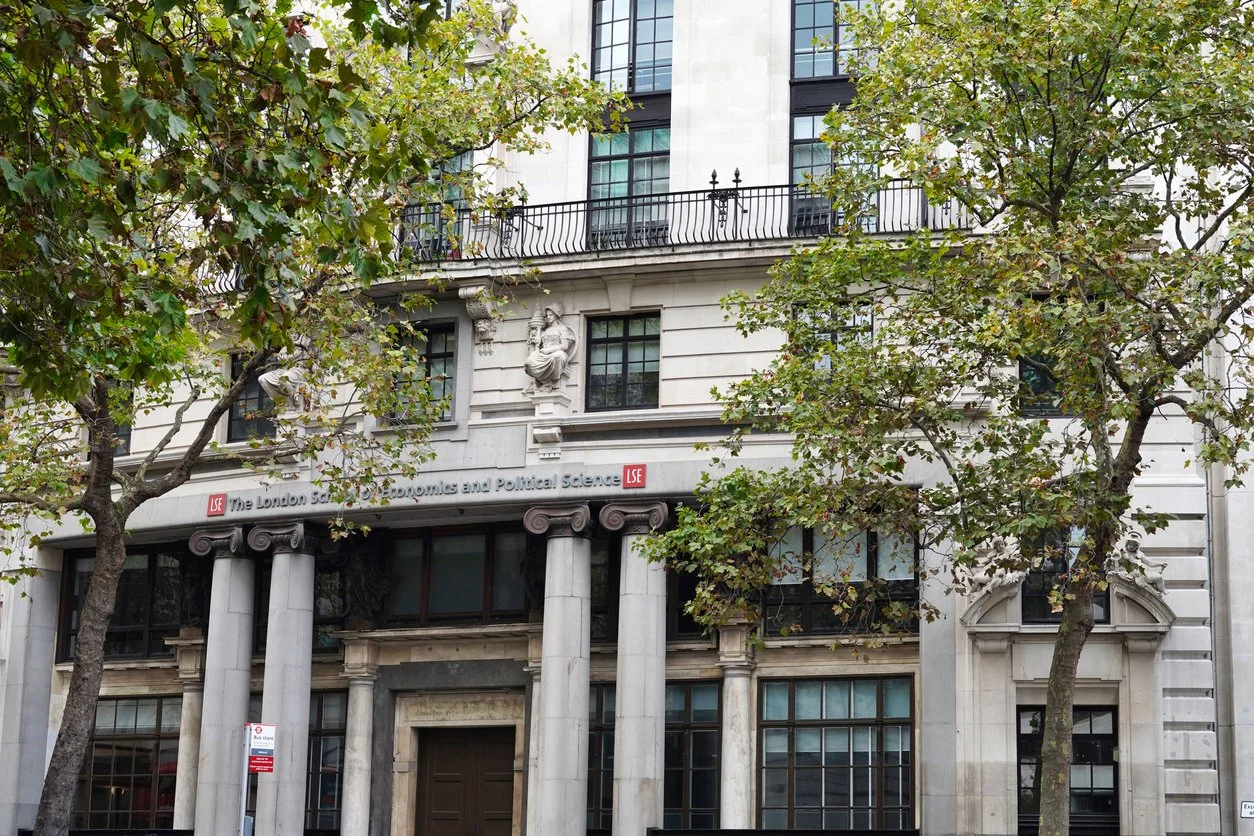
London School of Economics (LSE) is one of the best-ranked schools in the world, with top courses across politics, international relations, history, economics and more. It’s a popular choice for international students both for undergraduate and graduate courses. But did you know that the LSE admissions rates and statistics vary wildly between different course types and departments, as do grade requirements. You need to be very strategic when selecting your course to find a balance of good probabilities, while still making sure you’re applying to a course that you love and are well suited to.
For applicants seeking LSE admissions consultants, do reach out to J&J Education’s for expert mentoring.
LSE Undergraduate Admissions Statistics
LSE remains amongst the most competitive universities in the world. In 2025, LSE received around 30,000 undergraduate applications for 1,900 places, which is a roughly six percent admission rate. With such fierce competition, even meeting entry requirements would not guarantee admission and many well-qualified students do end up being rejected each year.
Besides the overall general admission rate, you can see below some admission rates and number of places/applicants in 2024, for a range of popular LSE undergraduate courses :
1. LSE BSc Economics Admission Rate: 5.8% (3731 applications for an intake of 225 students)
2. LSE BSc Mathematics & Economics Admission Rate: 7.8% (765 applications for an intake of 60 students)
3. LSE LLB Bachelor of Law Admission Rate: 5.7% (2964 applications for an intake of 170 students)
4. LSE BSc Philosophy, Politics and Economics Admission Rate: 3.5% (1094 applications for an intake of 39 students)
5. LSE BSc Politics and International Relations Admission Rate: 3.3% (1112 applications for an intake of 37 students)
6. LSE BSc Politics Admission Rate: 10.7% (308 applications for an intake of 33 students)
7. LSE BSc Sociology Admission Rate: 6.8% (528 applications for an intake of 36 students)
8. LSE BSc International Relations and History Admission Rate: 11.9% (260 applications for an intake of 31 students)
9. LSE BSc Social Anthropology Admission Rate: 19% (105 applications for an intake of 20 students)
10. LSE International Social and Public Policy BSc Admission Rate: 9% (253 applications for an intake of 23 students)
A note of caution: make sure to take these statistics with a grain of salt and see them as only one piece of contextual information in part of a broader pattern. Admissions statistics alone, for example, tell you little about the quality of other candidates you are competing against. What’s more, there is a qualitative dimension to course selection, as well. For example, if you are a strong candidate in economics who loves economics, you may come across better in that application than you would for another, ostensibly easier-admit programme. Different subjects will also have different grade requirements and subject specific requirements, so all of this takes a lot of parsing.
FAQ
Q: What is the easiest programme for LSE undergraduate admission?
A: In recent cycles, the LSE undergraduate programmes with higher admit rates would tend to be the double digit admit rates, with some programmes approaching 19%, such as BSc Social Anthropology (although, as you can see from the data above, this has a very small intake of students in absolute number).
Q: What is the hardest programme for LSE undergraduate admission?
A: In recent cycles, the LSE undergraduate programmes with lower admit rates tend to be programmes clustering around law, economics and maths, all of which are in the low single digit admission rates, with large applicant pools.

LSE Graduate Admissions Statistics
LSE remains amongst the most competitive universities in the world. Although the good news is that a number of the graduate programmes at LSE have lower admission rates than their undergraduate counterparts — and that there are many options for students looking to do Master’s here.
You can see below some admission rates and number of places/applicants in 2024, for a range of LSE graduate programmes, including the most popular courses LSE provides:
1. LSE MSc Economics Admission Rate:12.8% (936 applications for an intake of 120 students)
2. LSE MSc Public Policy and Administration Admission Rate: 11.4% (455 applications for an intake of 52 students)
3. LSE MSc Finance and Economics Admission Rate: 6.9% (761 applications for an intake of 53 students)
4. LSE LLM Law Master's Admission Rate: 13% (2533 applications for an intake of 330 students)
5. LSE MSc International Relations Admission Rate: 13.4% (1092 applications for an intake of 147 students)
6. LSE MSc Politics and Communication Admission Rate: 19.4% (185 applications for an intake of 36 students)
7. LSE MSc Data Science Admission Rate: 7.9% (605 applications for an intake of 48 students)
8. LSE MSc in Management (MiM) Admission Rate: 6.6% (1125 applications for an intake of 75 students)
9. LSE MSc History of International Relations Admission Rate: 25.9% (131 applications for an intake of 34 students)
10. LSE MSc Philosophy of Science Admission Rate: 16.2% (74 applications for an intake of 12 students)
A note of caution: as we mentioned for undergraduate statistics above, do make sure to take these LSE graduate admissions statistics with a grain of salt and see them as only one piece of contextual information in part of a broader pattern. Admissions statistics alone, for example, tell you little about the quality of other candidates you are competing against. What’s more, there is a qualitative dimension to course selection, as well. For example, if you are a strong candidate in economics who loves economics, you may come across better in that application than you would for another, ostensibly easier-admit programme. Different subjects will also have different grade requirements and subject specific requirements, so all of this takes a lot of parsing.
FAQ
Q: What is the easiest programme for LSE graduate admission?
A: In recent cycles, the LSE undergraduate programmes with higher admit rates would tend to be the double digit admit rates, with some programmes approaching 25%, such as MSc History of International Relations (although, as you can see from the data above, this has a very small intake of students in absolute number).
Q: What is the hardest programme for LSE graduate admission?
A: In recent cycles, the LSE undergraduate programmes with lower admit rates tend to be programmes clustering around economics, finance and data science, all of which are known to be very competitive.

Final Thoughts
LSE is a top school with outstanding programmes that will bolster your career prospects and CV. LSE offers enriching and rigorous programmes geared to your interests and some of the most demanding but rewarding graduate and undergraduate courses in the world, with admission rates rivalling some of the most well known names like Oxford, Cambridge and Ivy League schools. If you would like expert support on your LSE applications— from course selection to personal statements—consider working with J&J Education’s LSE admissions consultants here.
