
How to Apply to LSE as a Graduate Student
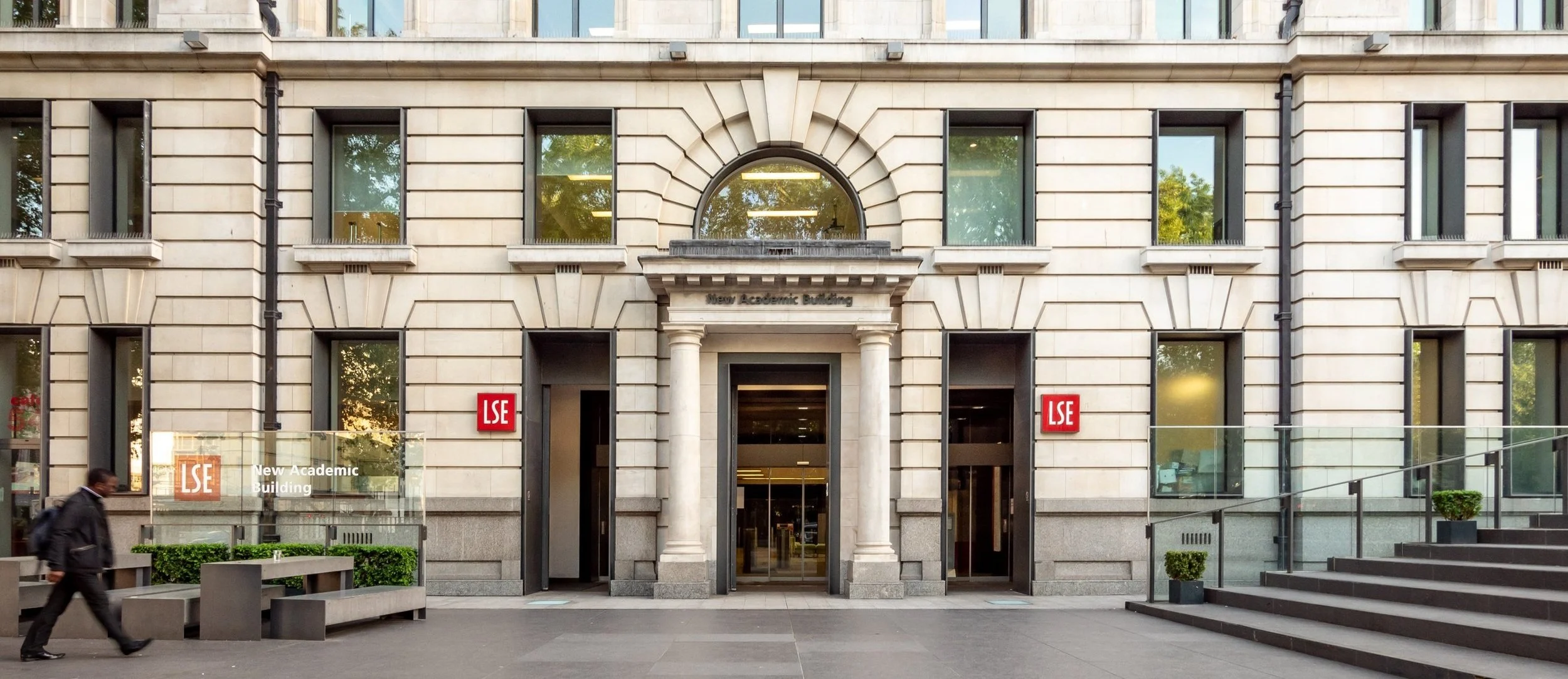
Applying to London School of Economics (LSE) as a graduate student is a popular choice for many international applicants seeking a world-class, modern education in the heart of London. LSE has dozens of graduate programmes across various disciplines, with a particular focus on law, politics, international relations, history, economics and the social sciences.
Applying to London School of Economics as a graduate student involves demonstrating subject specific academic ability. The precise steps will vary depending on the exact course, course type and department. This guide is focused around Master’s applications for LSE. For applicants seeking experienced graduate admissions consultants for LSE applications, do reach out to J&J Education’s expert mentors.
LSE Graduate Admissions Components
Students applying for a taught master’s program at LSE will need to submit several core application components. LSE expects each element to show academic ability with the course.
Typical application components include a combination of academic transcripts, personal statements or research proposals, referees, CV or academic résumé and writing samples.
LSE master’s programs are very competitive, with strong applicants often presenting a first-class or upper second-class undergraduate record, depending on the programme. Working with experienced graduate admissions consultants can help applicants refine their materials and present a compelling case for acceptance.
FAQ
Q: What grades do I need for LSE graduate admissions?
A: This is an important question and the precise grades needed will depend on the exact course you’re applying to. Many competitive LSE courses will want students to have the highest possible degree classification (First Class Honours for UK applicants) or its international equivalent, although there are a number of LSE courses where you can apply with lower grades, too, and which are less competitive.
Q: How important are academic references in LSE graduate applications?
A: Academic references help LSE to assess your potential and are therefore a central part of the process. Strong endorsements from professors who know your work well can enhance your application and back up the narratives and arguments you are putting across in your statements and some LSE courses would ask for professional referees as well, especially for programmes which are for advanced professionals or more directly related to a specific profession.

Choosing the Right Master’s Course for LSE
Selecting the right course is a critical early step. LSE offers a wide range of master’s degrees. LSE has a number of different programme options, not just between different disciplines but even within the same cluster. So say, for example, you wish to study international relations or policy, you’ll have a whole range of programmes to choose from. And you should select wisely, since admissions admission rates and competitiveness can vary significantly, even for seemingly similar courses.
You can usually apply for two programmes at LSE in the admissions portal and will need to submit two separate academic statements, each one geared for the exact course. If you are not admitted for your first choice programme, typically you would then be considered for the second.
It’s best to decide which course to apply to based on a range of factors including competitiveness, but also looking at which courses are the best fit for your background and career goals. Take into account that the exact course name may not matter as much as which modules you’ll be able to take once admitted, so do a deep-dive into the curriculum and course structure.
FAQ
Q: Should I apply to LSE or Oxford/Cambridge?
A: Many applicants looking at LSE are also considering Oxbridge. At the graduate level you can apply to all three without restriction.
Q: Is London School of Economics a top school?
A: LSE is consistently ranked amongst the best universities in the world. The Good University Guide named LSE as University of the Year and The Times Good University Guide recently gave LSE number one university in the UK. LSE is most well known for law, business economics and policy programmes.

LSE Graduate Admission Timelines Preparation Timelines
Many London School of Economics graduate programmes operate on a rolling admissions basis without a set deadline. So it’s advisable to submit your application as soon as reasonably possible within the cycle — that means as soon as your application is in a strong enough position and all elements are together including well-constructed admissions statements. Students do still get admitted later in the cycle, but especially for the most competitive course, we’d advise at least submitting by December of the year before entry, where possible.
Where possible, we recommend starting to prepare around 4-12 months in advance so that you can work systematically on all elements of the application process from researching courses to drafting compelling personal statements targeted to your exact areas of interests and so that you can bolster your academic profile over time.
Final Thoughts
LSE is a top school with outstanding graduate programmes that will bolster your career prospects and CV. LSE offers enriching and rigorous programmes geared to your interests and some of the most demanding but rewarding graduate experiences globally. If you would like expert support on your LSE graduate applications — from course selection to personal statements — consider working with J&J Education’s graduate admissions consultants here.
